
As we have explored the life of Abram in this series of posts, we have seen that his story has much to teach us about following God and learning His ways. We began the series with Abram’s calling to leave Ur to go to a land that God would show him. As we followed Abram on this journey, we have seen how sin derailed him, but God was faithful to get him back on track. In today’s post, we will see that God changed Abram’s character as he began to follow God’s lead, and that God was faithful even when Abram wasn’t.
Genesis 11:29 tells us that Abram married Sarai; Genesis 20:12 explains that Sarai was his half-sister, born to another wife of his father. Sarai was extraordinarily beautiful and her beauty was one of the reasons Abram lied more than once. When Abram led his family into Egypt to escape the famine in Canaan, Abram said to Sarai, “Behold now, I know that thou are a fair woman to look upon. Therefore, it shall come to pass, when the Egyptians shall see thee, that they shall say, This is his wife; and they will kill me, but they will save thee alive. Say, I pray thee, that thou art my sister: that it may be well with me for thy sake; and my soul shall live because of thee.” (Gen 12:11-13)
Perhaps in Abram’s eyes at the time, this was the right thing to do, but Abram surely knew that he was twisting the truth to protect himself. While Sarai was indeed his half-sister, it was more significant that she was his wife. Abram admitted that she was beautiful and desirable. We can see that Abram’s faith at this point is rather weak. He trusted God enough to leave Ur, but didn’t trust Him to provide for his family in Canaan during the famine, so he led his family on to Egypt. He still put his trust in his own ability at this point, endangering Sarai in the process, and revealing his love of himself over her and his lack of respect for her worth. And, of course, the obvious result came about. The Bible records that Pharoah’s princes saw Sarai’s beauty and “commended her before Pharoah: and the woman was taken into Pharoah’s house.” (Gen 12:15-16)
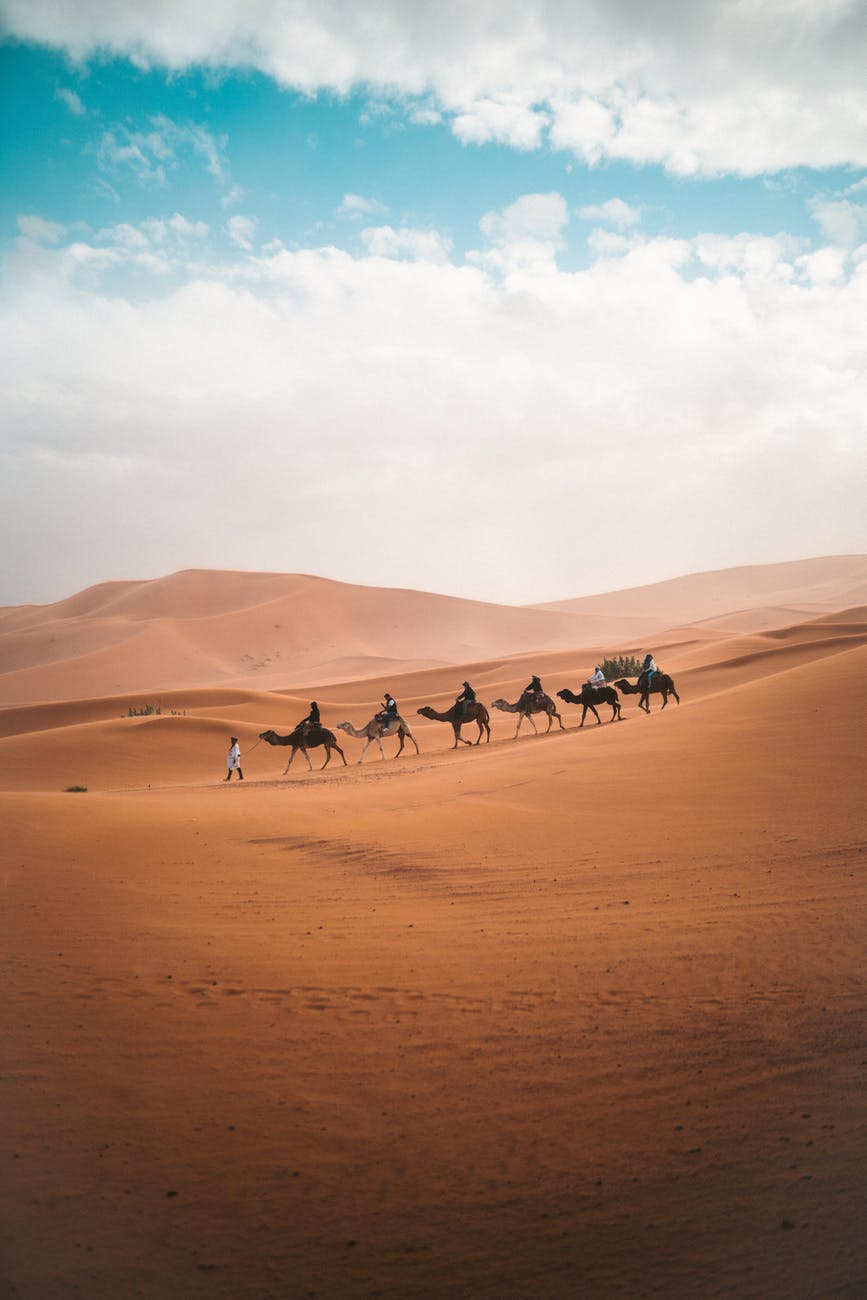
The Bible records that Abram was given sheep, oxen, donkeys, camels, and servants in place of Sarai, but did he protest that she was his wife? Can sheep, oxen, donkeys, camels, and servants take the place of his wife, his gift from God and mother of his future heir? No, the Bible doesn’t record any word of protest from Abram, but Almighty God certainly protested! Genesis 12:17 states: “And the Lord plagued Pharoah and his house with great plagues because of Sarai Abram’s wife.” God had other plans for Sarai, plans that included Sarai as the future mother of Isaac, from whom would come “a great nation!” (Gen 12:2) Had Abram forgotten all that God has promised? Apparently. As David wrote fourteen generations later: “As for man, his days are like grass; As a flower of the field, so he flourishes. When the wind has passed over it, it is no more, And its place acknowledges it no longer.” Ps 103:15-16.
And surprisingly here, Pharoah shows more respect than Abram, when he realizes why his household had been struck with plagues. He asked Abram why he claimed that his wife was his sister, and ordered him to take her and sent them away. Of course, Abram goes away quite loaded with wealth now. Gen 13:2 confirms that “Abram was very rich in cattle, in silver, and in gold.” In spite of Abram’s bad choices, God not only protected Sarai, but also provided a means for them to travel back to Canaan and thrive in spite of the famine.
Abram and his family then traveled back to Canaan, and this journey must have been much more cumbersome than the last as “Abram was very rich in cattle, in silver, and in gold.” (Gen 13:2). Abram must have been humbled now because he eventually reached “the place where his tent had been in the beginning, between Bethel and Hai, unto the place of the altar, which he had made there at the first…” Gen 13:3-4. What had he learned from this experience? We find that now Abram “called on the name of the Lord.” Gen 13:4. Perhaps he prayed a prayer of repentance and faith. Perhaps he asked for forgiveness. Perhaps he asked for restitution of his marriage. We don’t know, but we do see a change in his behavior.
Abram and Lot are so rich that “the land was not able to bear them, that they might dwell together: for their substance was so great…” Gen 13:6 And, now Abram’s self-love has turned to humility as he instructs Lot that he doesn’t want any strife between them and suggests that Lot take his pick of the land and that he would take his family elsewhere. “Then Lot chose him all the plain of Jordan; and Lot journeyed east: and they separated themselves the one from the other.” As we come to find out later, this is a fateful decision for Lot and his family, but we also see that even after Abram’s failures to trust Him, God brings good things out of this decision for Abram. Which brings us to our lesson for this passage. Lesson 7: Our God is ever faithful, even when we aren’t!
 From Peggy's Pen
Praise the Lord for is ALWAYS with us and forgives us! Lynne Warnock
LikeLike