Lessons from Abraham #8

In this series of posts on the life of Abraham, we have learned a great deal about man’s character. Like Abram, all men have a tendency to waver, but Almighty God is unwavering and immutable. The Bible tells us that God is perfect in all His ways (Psalm 18:30), immutable, unchanging in His character. “For I the Lord, do not change…” the prophet Malachi recorded in Chapter 3, verse 6.

In previous posts, we have seen how Abram, in his journey to the promised land, was humbled and changed during this trip. It began when his family arrived safely in Canaan, but they realized the land was suffering from a famine. After he unwisely made the decision to leave Canaan and move his family into Egypt, Abram instructed Sarai to lie about their marriage in order to protect himself, even though this compromised his values. Abraham’s compromise, rather than maintaining peace and safety as he hoped it would, caused more trouble than he realized, aggravating the Egyptians and probably losing their respect and thereby any witness that he might have made of his faith, perhaps also losing the respect of Lot, his nephew, who obviously looked up to Abraham in place of his father, and also obviously still needed direction. In fact, Abram’s selfish deceit nearly jeopardized all the plans God had for him and his descendants had He not intervened. But Almighty God, unwavering and immutable in character, was faithful, and Abram was changed as a result; he went from depending on his own plans and ideas, which threatened his family’s safety and well-being as well as his own, to wisely trusting God and depending on His wisdom and perfect plans instead.

Photo by Harry Cooke on Pexels.com

How often are we all just like Abram? We make decisions daily that are selfish and unwise, not realizing the fallout they bring on us and on others. We fail to see the big picture in our own circumstances, much less the unfolding of God’s great plan for humanity.  We fail to trust God for the circumstances that He alone is in control of; moreover, we fail to see the consequences of our indecisions and even our very best decisions. Yet God faithfully guides us if we seek Him. Jeremiah 33:3 says, “Call to me and I will answer you, and will tell you great and hidden things that you have not known.”

Only God knows the plans He has for us! Only God knows the plans He has for others. Jeremiah 29:11 says “For I know the plans I have for you,’ declares the Lord, plans to prosper you and not to harm you, plans to give you a hope and a future.”We can trust Him. In fact, we can only trust Him. Other people will disappoint us and fail us, but God alone is faithful.

Surely Abram’s story raises questions. Did Abram realize that God was fully able to provide for them in spite of the famine in the land? He probably knew of God’s faithfulness to Noah and his family, providing for them during the flood and afterwards. In Abram’s actions we see that he was beginning to learn not only the character of our God, but also of God’s unlimited power and wisdom. Moreover, Abraham was beginning to see that God means what He tells us and doesn’t accept our modifications to His plan. God already knew of the famine in Canaan. Perhaps it was a test of Abram’s faith in Him to provide for his family. Abram will certainly encounter other tests down the road. We do know this, if the circumstances in Canaan were a test, Abram didn’t pass it the first time around! But when he went back to Canaan with a new heart and mind, he is beginning to see that God means what He says.

So the lesson for today’s post is this: God is able to provide for our needs, even when we cannot see how, and God does not accept compromises.
Lessons from Abraham #7

As we have explored the life of Abram in this series of posts, we have seen that his story has much to teach us about following God and learning His ways. We began the series with Abram’s calling to leave Ur to go to a land that God would show him. As we followed Abram on this journey, we have seen how sin derailed him, but God was faithful to get him back on track. In today’s post, we will see that God changed Abram’s character as he began to follow God’s lead, and that God was faithful even when Abram wasn’t.

Genesis 11:29 tells us that Abram married Sarai; Genesis 20:12 explains that Sarai was his half-sister, born to another wife of his father. Sarai was extraordinarily beautiful and her beauty was one of the reasons Abram lied more than once. When Abram led his family into Egypt to escape the famine in Canaan, Abram said to Sarai, “Behold now, I know that thou are a fair woman to look upon. Therefore, it shall come to pass, when the Egyptians shall see thee, that they shall say, This is his wife; and they will kill me, but they will save thee alive. Say, I pray thee, that thou art my sister: that it may be well with me for thy sake; and my soul shall live because of thee.” (Gen 12:11-13)

Perhaps in Abram’s eyes at the time, this was the right thing to do, but Abram surely knew that he was twisting the truth to protect himself. While Sarai was indeed his half-sister, it was more significant that she was his wife. Abram admitted that she was beautiful and desirable. We can see that Abram’s faith at this point is rather weak. He trusted God enough to leave Ur, but didn’t trust Him to provide for his family in Canaan during the famine, so he led his family on to Egypt. He still put his trust in his own ability at this point, endangering Sarai in the process, and revealing his love of himself over her and his lack of respect for her worth. And, of course, the obvious result came about. The Bible records that Pharoah’s princes saw Sarai’s beauty and “commended her before Pharoah: and the woman was taken into Pharoah’s house.” (Gen 12:15-16)

Photo by Taryn Elliott on Pexels.com

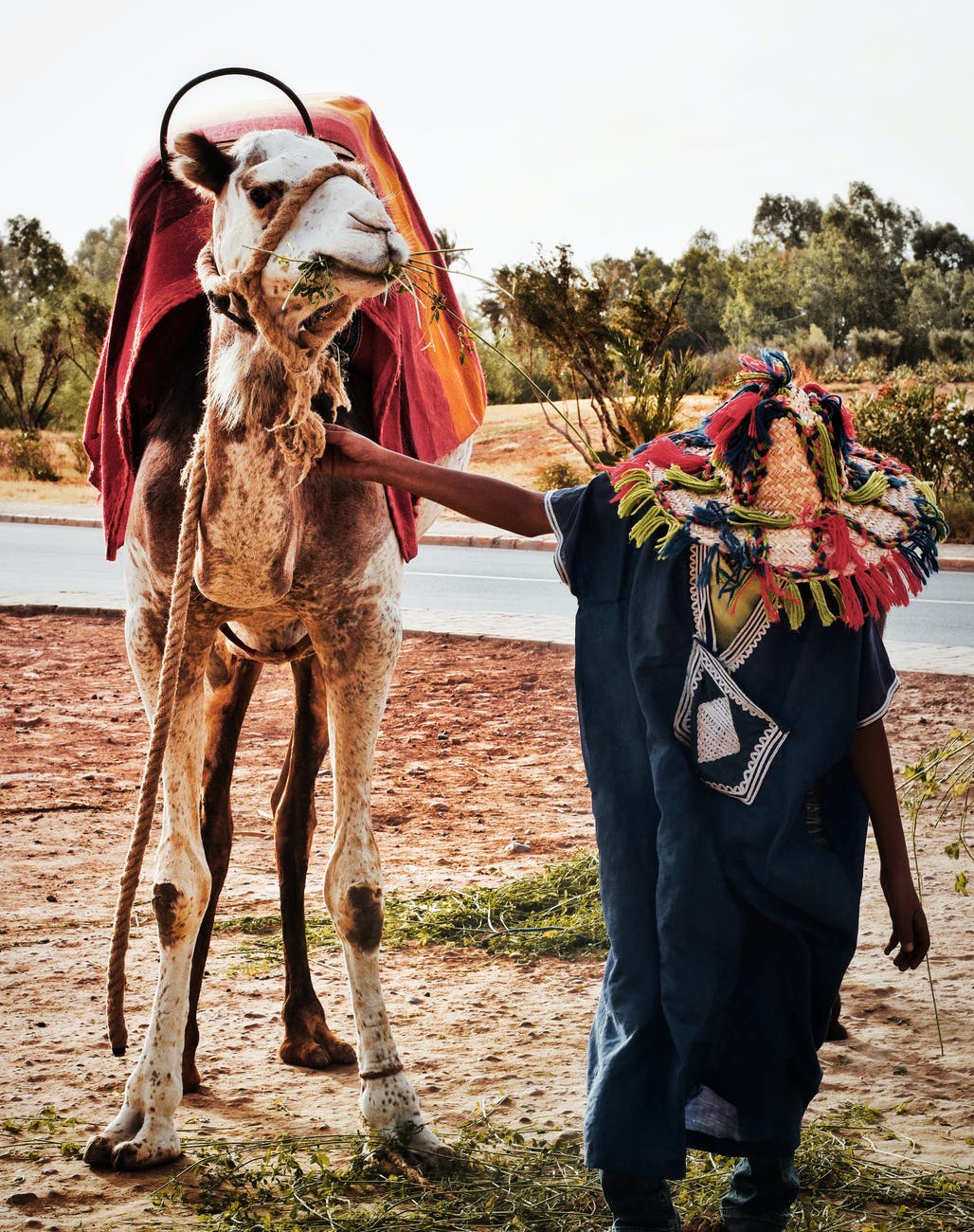
The Bible records that Abram was given sheep, oxen, donkeys, camels, and servants in place of Sarai, but did he protest that she was his wife? Can sheep, oxen, donkeys, camels, and servants take the place of his wife, his gift from God and mother of his future heir? No, the Bible doesn’t record any word of protest from Abram, but Almighty God certainly protested! Genesis 12:17 states: “And the Lord plagued Pharoah and his house with great plagues because of Sarai Abram’s wife.” God had other plans for Sarai, plans that included Sarai as the future mother of Isaac, from whom would come “a great nation!” (Gen 12:2) Had Abram forgotten all that God has promised?  Apparently. As David wrote fourteen generations later: “As for man, his days are like grass; As a flower of the field, so he flourishes. When the wind has passed over it, it is no more, And its place acknowledges it no longer.” Ps 103:15-16.

And surprisingly here, Pharoah shows more respect than Abram, when he realizes why his household had been struck with plagues. He asked Abram why he claimed that his wife was his sister, and ordered him to take her and sent them away. Of course, Abram goes away quite loaded with wealth now. Gen 13:2 confirms that “Abram was very rich in cattle, in silver, and in gold.” In spite of Abram’s bad choices, God not only protected Sarai, but also provided a means for them to travel back to Canaan and thrive in spite of the famine.

Abram and his family then traveled back to Canaan, and this journey must have been much more cumbersome than the last as “Abram was very rich in cattle, in silver, and in gold.” (Gen 13:2). Abram must have been humbled now because he eventually reached “the place where his tent had been in the beginning, between Bethel and Hai, unto the place of the altar, which he had made there at the first…” Gen 13:3-4. What had he learned from this experience? We find that now Abram “called on the name of the Lord.” Gen 13:4. Perhaps he prayed a prayer of repentance and faith. Perhaps he asked for forgiveness. Perhaps he asked for restitution of his marriage. We don’t know, but we do see a change in his behavior.

Abram and Lot are so rich that “the land was not able to bear them, that they might dwell together: for their substance was so great…” Gen 13:6 And, now Abram’s self-love has turned to humility as he instructs Lot that he doesn’t want any strife between them and suggests that Lot take his pick of the land and that he would take his family elsewhere. “Then Lot chose him all the plain of Jordan; and Lot journeyed east: and they separated themselves the one from the other.” As we come to find out later, this is a fateful decision for Lot and his family, but we also see that even after Abram’s failures to trust Him, God brings good things out of this decision for Abram. Which brings us to our lesson for this passage. Lesson 7: Our God is ever faithful, even when we aren’t!

Lessons from Abraham #6

In the previous post, we evaluated Abram’s diversion from God’s calling to move his family to Canaan. Abram left Ur in obedience to God’s command, but upon reaching Canaan and finding that “there was a famine in the land,” (Gen 12:10) Abram continued on to Egypt instead of trusting God to provide for him and his family. What did this tragic mistake cost?

The Cost of Obedience

As many Christians today have found out, there is a cost to obedience, and sometimes it is persecution. Even in a country with religious freedom, following Christianity may come at a cost, especially for those who were raised in other faiths. But what about the cost of disobedience?

Abram had received a promise from God along with his calling to leave Ur. God promised to make a great nation of Abram’s descendants, and to bless him and his family and all families of the earth. Surely Abram’s heart was filled with joy at this promise, and surely he was eager to fulfill God’s calling for him. And, he was obedient, at least until he ran into trouble.

We cannot say for sure what Abram was thinking at this point, but one thing is sure—we’ve all been through similar circumstances. What should Abram have done? It’s easy for us to say that he should have been obedient and stayed there, trusting God’s provision. But, scripture tells us “And there was a famine in the land: and Abram went down into Egypt to sojourn there; for the famine was grievous in the land.”

We have already tried to visualize the caravan that Abram brought with him to Canaan. He would have had his wife, Sarai, and his nephew, Lot, of course, but Abram had come from a prosperous city, and most likely had many household servants in addition to personal servants, as well as flocks and shepherds to care for them. He probably had many mouths to feed in addition to his sheep, goats, and camels. A daily meal for all would have been a lot of food and drink. But Abram lived long before the time of Moses and would not have had the stories of God’s miraculous provision for the Israelites to bolster his faith. So, Abram, in his humanity, decided it was best to move his family to Egypt. And what a tragic mistake that was! As soon as Abram and his entourage arrived, he slips again, lying about Sarai’s status to protect himself. Abram, what were you thinking? What must Sarai have felt?

Photo by Tima Miroshnichenko on Pexels.com

Abram’s Character

This incident reveals a little more about Abram’s character. He was obedient, but not completely, and he was a bit lacking in honesty. Of course, not one of us is perfect, right? Yet God uses whomever He chooses, and he chose Abram.
As soon as Pharaoh took Sarai, Pharoah gifted Abram abundantly. “And he entreated Abram well for her sake: and he had sheep, and oxen, and he-asses, and menservants, and maidservants, and she-asses, and camels.” But was this a fair trade for Abram’s wife and the mother of the great nation God had promised? Um, no! Abram already had servants and flocks. Was he not satisfied with what he already had? Something worth considering even today, right?

Praise God that He intervened immediately! “And the Lord plagued Pharoah and his house with great plagues because of Sarai, Abram’s wife.” (Gen 12:17) God had the situation under control, in spite of Abram. But there were consequences, and they didn’t just affect Abram and Sarai!

Our Decisions Affect Others

Pharoah was no dummy! Once he took Sarai into his harem and the plagues began, he knew immediately the source of the problem. He confronted Abram, saying, “What is this thou hast done unto me? Why didst thou not tell me she was thy wife?” (Gen 12: 18) The Bible doesn’t even record Abram’s response. Instead, we read that Pharoah banished Abram and his family from Egypt, sending him and his wife, and all that they had away. So, Abram returned to Bethel. I’d like to think that he did so in shame, but the Bible doesn’t say. It does record that Abram seems quite humble now; so much so, that he offers Lot first choice of the land, but that is for another post! The bottom line is that our choices affect others, some we may never know. And God’s plans for us are always best. In fact, God’s plans for us are made with wisdom and understanding that we cannot comprehend. God knows us—not just our past, but also our future. He knows the future of others, and the grand scope of history. He can see all of it while we have very limited tunnel vision. Because He knows the past, present, and future, and loves us, we can trust that His plans are always best.

So, our lesson from Abraham today is: God’s promises for us are always for our good, and often in the best interest of others, as well.

Lessons from Abraham #5

In the previous post, we examined Abram’s move to Canaan in a long caravan of people and possessions. What we didn’t discuss in Lesson 4 was that Abram not only had a long caravan, but also a long journey to get to Canaan.

Abram came from Ur, a bustling Chaldean city. The ruins of this Mesopotamian city have been located in what is now Iraq, probably 140 miles to the southeast of Babylon. Ur was a port city, on the Persian Gulf, and a hub for trade, contributing to its size, prosperity, and significance in the region. It was centered at the point where the Tigris and Euphrates Rivers converge, and was prosperous and well-populated (scholars estimate more than 250 years had passed since the dispersion) by the time it was mentioned in the Biblical narrative.

For Abram to travel to Canaan from Ur, his family would have to travel through the countries known today as Iraq, Turkey, Syria, Lebanon, Israel, Egypt, and Jordan, an overwhelming journey to be made on the backs of camels or on foot. There was one way to reach Canaan from Ur and both Abram and his father, Terah, undoubtedly knew that way—through what is known as the Fertile Crescent. The Fertile Crescent, the breadbasket of this region, was a new- moon-shaped region that was known for its production of rice, cotton, citrus fruits, dates, figs, grapes and melon. Passing through this region provided them both abundance of food for the journey and safety in its well-established and well-travelled roads.

Abram and his family traveled first to Haran (Gen 11:31). The Bible tells us that the family dwelt in Haran for an indefinite period and that Terah died there (11:32) at the age of two hundred and five. Now God reminded Abram of his original command (Gen 12:1). “So Abram departed, as the Lord had spoken unto him; and Lot went with him; and Abram was seventy and five years old when he departed out of Haran.” (Gen 12:4). The Bible narrative then adds an interesting detail. “And Abram passed through the land unto the place of Sichem, unto the plain of Moreh.” (Gen 12: 6) The Lord confirmed this as the land that He was giving to Abram (12:7) and Abram built an altar there.  But then verses 9-10 deliver a punch: “And Abram journeyed, going on still toward the south. And there was a famine in the land; and Abram went down into Egypt to sojourn there; for the famine was grievous in the land.” So, the Lord appeared to Abram, confirming that Canaan was the place he was giving to Abram to be a blessing to him and his descendants, and Abram built an altar there, BUT he continued on from there, passing through the land and into Egypt! What? Did Abram misunderstand God’s calling? And even more, do we all?

So, Abram slipped and became afraid of the land of Canaan. Genesis included one detail: “And the Canaanite was then in the land.” Of course they were! The land was not uninhabited; was Abram expecting something different? The Lord himself appeared to Abram, confirming Abram’s calling to Canaan, and Abram built an altar and worshipped there, but then erred miserably. Isn’t this so often true of all of us as humans, that after a powerful “mountaintop” experience, we often find ourselves back in the valley below?

What’s more, we can already tell that nothing good will come of this misstep. Sure enough, in Egypt, the princes of Pharoah notice Sarah’s beauty and seize her for Pharoah’s house. What’s more, Abram had told her to lie about being his wife in order to protect him! (Gen 12:11-13). Sarah obeyed, but was in grave danger now that she was taken into Pharoah’s harem. And what of God’s blessing to make a great nation of Abram? Thankfully, the Lord intervened on Sarai’s behalf, in spite of Abram’s disobedience and sin, and brought plagues on Pharoah so that he released Sarai back to Abraham and sent him away.

Photo by Ryan Rawidhana on Pexels.com

So, Abram gets back on the “right road” as we see in the next chapter of Genesis. “And he went on his journeys from the south even to Bethel unto the place where his tent had been at the beginning, between Bethel and Hai, unto the place of the altar, which he had made there at the first, and there Abram called on the name of the Lord.” (Gen 13:3-4)

Now Abram is back where God intended for him to be, and things are moving forward again in keeping with God’s plans for him to form a great nation from him. But does Abram bear a son right away? That’s another story. But one thing is sure: God will accomplish His plans, even though He gives us free will, and because of that, we often miss the mark. Don’t you just wonder how different life might be if God had not intervened? Suppose Abram had not gone to Egypt and obtained the slave, Hagar? Much to ponder, but one thing is sure: Lesson 5: God doesn’t change his calling for us.

Lessons from Abraham #4

In the previous post, we noted that moving Abram’s family to Canaan must have been a slow process, considering that they moved on foot or on the backs of animals such as camels. What’s more, they had a huge number of servants, flocks and herds, and possessions to carry. We also noted that Abram’s family lived in tents—not what we know of today as small and cramped camping tents, but huge, multi-roomed tents much like the Bedouin tents today. And, once they were ready to settle in the promised land, Abram gave Lot first choice of where to dwell, while he and his family went in the opposite direction. We saw that Lot sought to place his family in an area of physical beauty and pleasure, while Abram sought to place his family in a right relationship with God, and it made all the difference.

Considering the characters of both Lot and Abram, we can only wonder what shaped them. What events in Lot’s life led him to become so shallow and focused on earthly pleasure? And, on the other hand, what led Abram to become a man so focused on God that he would offer his shallow nephew first choice of dwelling areas and then locate his family elsewhere? Do such events in our lives shape us?

Most definitely the events in our lives shape us and mold us into who we are, and God has a part in that. While we have free choice about how we live our lives, God is working in and through our life experiences, and using them to mold us. Romans 8:28 tells us: “We know that in all things God works for the good of those who love Him, who have been called according to His purpose.”  That is, God uses all of the experiences we have, both good and bad, for His purposes to form us as believers, to mold and shape those who love Him. Even our sins can be used to bring about God’s plans in our lives. Consider David and his grievous sin with Bathsheba. Even though he repented of his sin, he and Bathsheba suffered for it, ultimately losing their son, who died shortly after birth. In addition, three other sons of David died untimely deaths. But, David and Bathsheba’s next son became Solomon, who built the magnificent temple of the Lord in Jerusalem and became known as the wisest man who ever lived, and heir to the throne. Almighty God used the unfortunate circumstances of David’s sin to not only shape David’s character but also to be a blessing to many. Only God could turn our “mess into a message,” to quote Rick Warren.

“My brethren, count it all joy when ye fall into divers temptations; knowing this, that the trying of your faith worketh patience. But let patience have her perfect work, that ye may be perfect and entire, wanting nothing” (James 1:2–4).

What about those troubles that are not caused by our own sin? Adversity can come through accidents, through the sin of others, and through circumstances beyond our control because we live in a fallen world. God can use all of those circumstances to shape us. Paul wrote to the Corinthians: “Therefore I take pleasure in infirmities, in reproaches, in necessities, in persecutions, in distresses for Christ’s sake: for when I am weak, then am I strong” (II Corinthians 12:

10). Paul certainly experienced his share of adversity, but God used it all to make both Paul and his testimony strong, for the benefit of others.

While we don’t know a lot of details about Abram’s life before God called him to Canaan, we do know that he lost his brother to an early death. Abram’s brother, Haran, died before both his father and Abraham died, and before Abram’s family moved to Canaan. While no ages are given here, we do sense that Abram took some responsibility for his nephew Lot. When Lot was captured by a band or marauders, Abram gathered an army and went after them to rescue Lot. Genesis 14:14-16 recounts the events. “And when Abram heard that his brother was taken captive, he armed his trained servants, born in his own house, three hundred and eighteen, and pursued them unto Dan. And he divided himself against them, he and his servants, by night, and smote them, and pursued them nto Hobah, which is on the left hand of Damascus. And he brought back all the goods, and also brought again his brother Lot, and his goods, and the women also, and the people.”

It seems that as long as Lot was under Abram’s care, he did well, but once he was on his own, he made some poor choices. He went after what looked lovely to his eyes, blending in with the ways of Sodom, and then he was captured. Sound familiar? We’ve all been there—everyone has made some poor choices and tried to blend in with the world. The key is what you do afterwards. Do you repent and seek God, or do you continue after worldly pleasures? I Tim 5:6 warns: “But she who gives herself to wanton pleasure is dead even while she lives.”

No one but God knows when his time on earth will end. God has appointed the number of our days (Ps 139:16). Make sure to use them wisely, for death comes to all, and some sooner than others. Death, particularly an untimely death of a loved one can change things. The wise will consider their steps and prepare their hearts to meet their Maker.

Abraham lost his brother before he lost his father. Lesson 4: Death may change the lives of the living long before it is expected. Be prepared.

Lessons from Abraham #3

In the previous post, we noted that Abram was born and raised in a pagan culture. His ancestors, his father, and his brothers worshipped other gods, but Abram was called away from his family to a new land. “Now the Lord had said unto Abram, Get thee out of thy country, and from thy kindred, and from thy father’s house, unto a land that I will shew thee.” (Genesis 12:1)

This land that God promised Abram, afterwards known as “The Promised Land”—Canaan—would not only be Abram’s home from this point forward, but would also be home to his descendants. At this point, though, Abram had no descendants. In Canaan, Abram and his family would begin a new life where they worshipped the God of Creation, YHWH, rather than the pagan gods of his father and brothers and the Canaanite people in the land he went to possess. Because Abraham faithfully obeyed YHWH, he and the generations that followed were blessed because of his obedience. “And I will make of thee a great nation, and I will bless thee, and make thy name great; and thou shalt be a blessing.” (Genesis 12:2)

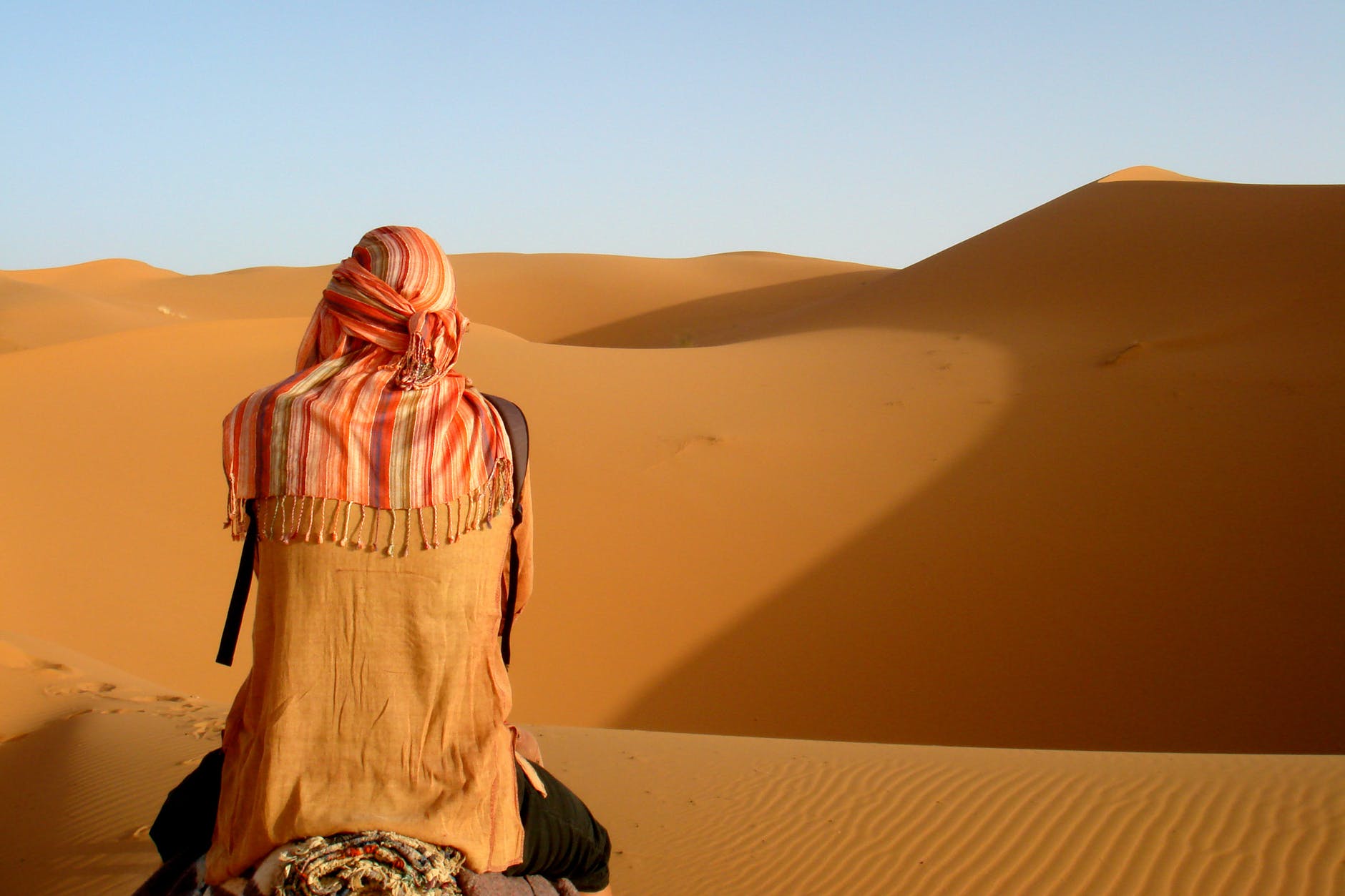
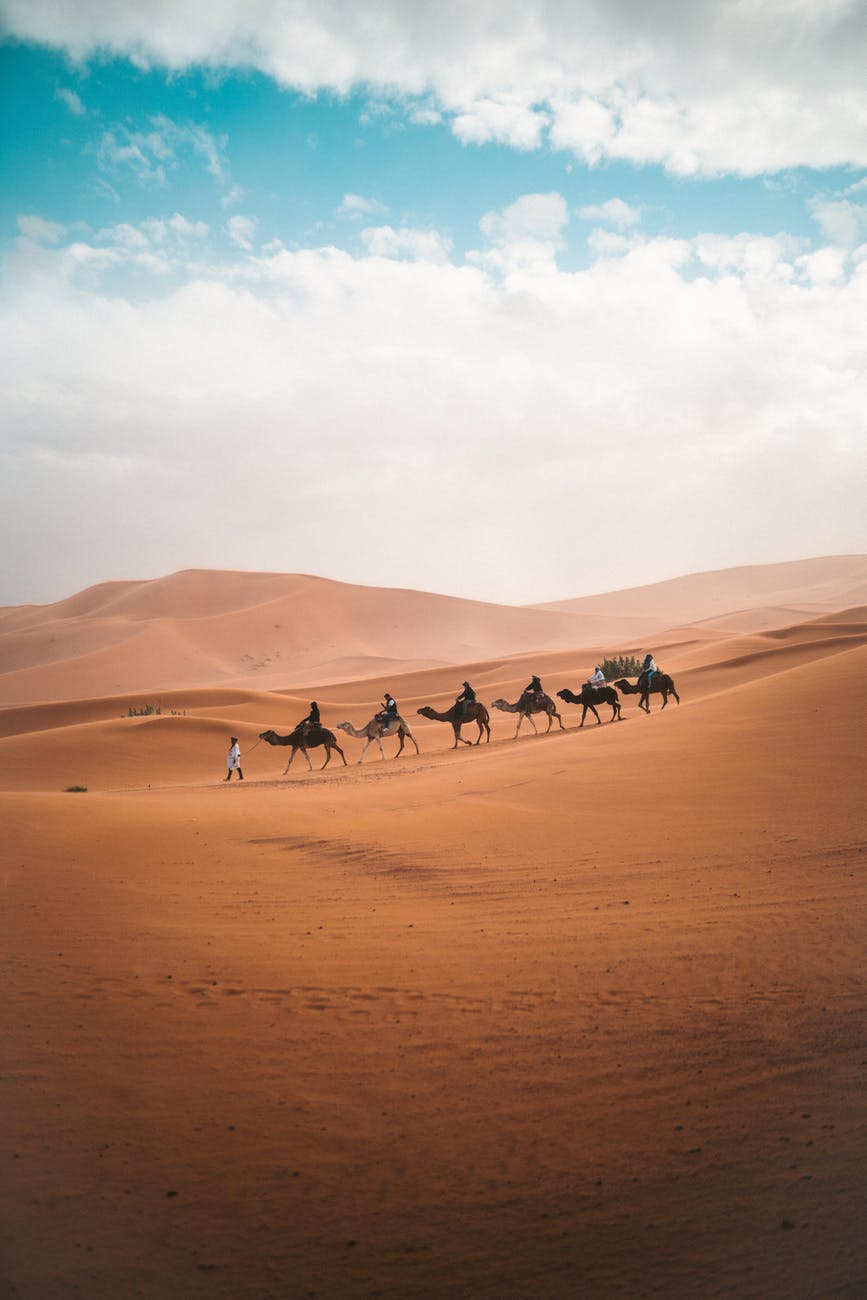
Can you imagine leaving a bustling, prosperous city such as Ur to move to an unknown land? Even though it may seem difficult to us, we would have moving vans and other mechanical means for transporting ourselves and our belongings from one place to another. It is likely that Abram and his family did a lot of walking and, perhaps some riding on camels. “And Abram took Sarai his wife, and Lot his brother’s son, and all their substance that they had gathered, and the souls that they had gotten in Haran; and they went forth to go into the land of Canaan; and into the land of Canaan they came.” This must have been a sight to behold! Abram and his family did not merely consist of three people, Abram, Sarai, and Lot, but also many personal servants, and herds of livestock, as well as all of their possessions strapped onto the backs of animals and pulled in carts of wagons. This “caravan” must have been quite large in order to transport everything they possessed as well as carry tents and poles and so forth for all of the people to dwell in.

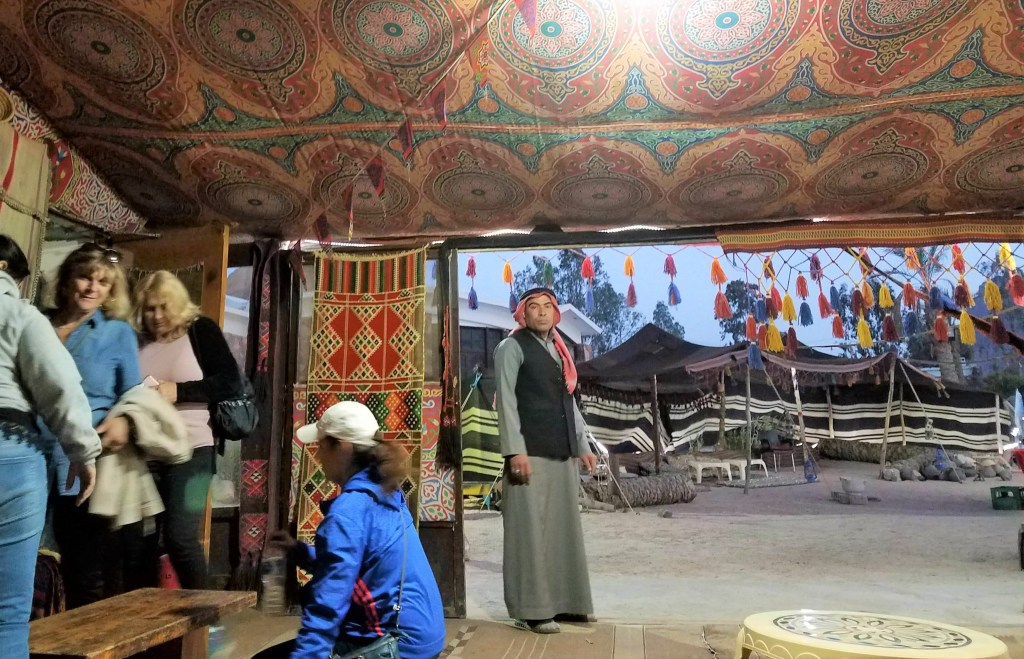
The tents of Abram’s day were probably very similar to those of Bedouin tribes today. Coming from the same region and following ancient traditions, the Bedouin people are nomadic and move from place to place seasonally. In order to facilitate this lifestyle, they are tent dwellers. Their tents are not at all like a tent such as we might use for camping. These tents are (and were) traditionally quite large and spacious inside, with more than one room and big enough to entertain and sleep many people. The tents were supported with wooden poles around the outside and in the middle and the coverings were layered and wisely chosen to not only keep heat in during cold weather but also keep out the heat in hot weather. The outermost covering was skin that kept the inside dry. In the Arabian peninsula, we had the opportunity to visit a colorful traditional Bedouin tent with our tour group of approximately fifty people. Everyone was seated comfortably on low couches and enjoyed dinner together.

Given these few details, perhaps you can imagine that moving Abram’s entire family was slow and cumbersome. But when he and his caravan reached the land of Canaan and moved along the Jordan River Valley, Abram gave Lot first choice of the area in which he and his people would dwell. “And Lot lifted up his eyes, and beheld all the plain of Jordan, that it was well watered everywhere before the Lord destroyed Sodom and Gomorrah, even as the garden of the Lord, like the land of Egypt as thou comest into Zoar. Then Lot chose him all the plain or Jordan; and Lot journeyed east;” (Gen 13:10-11). What Lot beheld seemed like Eden to him, and he chose for himself what looked to be the most beautiful, without considering the inhabitants of this land. “But the men of Sodom were wicked and sinners before the Lord exceedingly.” Gen 13:13. Lot seems to have been very shallow, considering only the appearance of the area, and he had first choice over his uncle and elder, Abram.

Abram on the other hand, choose to go in the opposite direction from Lot, or to the west. “Then Abram removed his tent, and came and dwelt in the plain of Mamre, which is in Hebron, and built there an altar unto the Lord. Abram wasn’t as concerned with the appearance of the land. He apparently realized that what mattered most was His relationship with God, as the first thing he did was build an altar to worship. Abram’s character reveals much about his relationship with God and the deep abiding faith that led him to accept the land that was less beautiful in appearance, but more like what our Lord himself would have chosen. And so, the promised possession became a blessing to Abram and Abram became a blessing because of his obedience, and God promised to give him descendents.

The character of these two men and their family reveals a lesson well worth remembering. While Lot sought after physical beauty and comfort, Abram sought spiritual beauty and comfort, and the Lord blessed him. Lesson #3, then: The charms of this world are powerful but fleeting. Terah, Lot, and Lot’s wife, as we soon will see, all seemed to fall for them.

Lessons from Abraham #2

But what do we know about Abraham’s life before God called him to Canaan?

In the previous post, we noted that Abraham lived a remarkable life and that much of the book of Genesis was devoted to detailing the events of that remarkable life, preserving his shortcomings and successes, trials and tribulations for all to examine and learn from, if we will. And the post concluded that it is important to pass down our faith to the next generation for we don’t know what God has planned for them. Abraham did pass down his faith to Isaac; and Isaac, in turn, passed it down to his twelve sons, and so God blessed them, as we will see in the lives of future generations of Abraham’s family.

But what do we know about Abraham’s life before God called him to Canaan?

In general, we know that Abraham was born and raised in a pagan culture. His homeland was Ur of the Chaldeans. The city of Ur was situated in what was once Mesopotamia, which is in the area of the present-day Iraq, Kuwait, and parts of Iran, Syria, and Turkey. The region of Ur was over one hundred miles to the southeast of Babylon, or Babel, known for the infamous tower that resulted in the division of the nations after the flood.

What do we know about Abraham’s early life in Ur? First, we know that his name then was Abram. This is interesting, because Abram was childless at this time, but his name meant, “exalted father.” Having such a name must have been an embarrassment to him, as names were key to establishing a man’s identity, and having a male heir was important to men in Abram’s society.

Second, we know that Ur was a large, prosperous city. Archeological digs have revealed a huge library of clay tablets in Ur, which is a significant find—one that proves that men knew how to read and write long before Abram’s time.  Ur was also a city of idolatry. Joshua 24:14-15 says, “Now fear the Lord and serve Him with all faithfulness. Throw away the gods your ancestors worshipped beyond the Euphrates River and in Egypt and serve the Lord.  But if serving the Lord seems undesirable to you, then choose for yourselves this day whom you will serve, whether the gods your ancestors served beyond the Euphrates, or the gods of the Amorites, in whose land you are living…” The Euphrates River was one of the major rivers in Chaldea, and the Chaldean people were known for their worship of astrology.

Third, we know that Abram’s wife was Sarai, his half-sister, born to his father by a woman other than Abram’s mother. (Genesis 20:12 explains this situation further: “Besides, she is indeed my sister, the daughter of my father though not the daughter of my mother, and she became my wife.”) One of Abram’s brothers, Nahor, married his niece, Milcah, who was the daughter of his other brother, Haran. Haran was also the father of Lot. (Genesis 11:29). Obviously, marrying close relatives was neither forbidden nor a genetic problem at this point in history.

Fourth, we know that Abram’s father, Terah, moved his family from Ur to Haran. Genesis 12:4 tells us that Abraham was 75 years old at this time. No details are given as to why they moved, although we do know that Haran had died. Perhaps the city of Haran was named after him, or he was named after the city. Nevertheless, Haran died before his father and brothers, and left a son behind. Some time after that, Terah died as well, having lived two hundred and five years.  As mentioned in the previous post, since the time of the flood, the average age of people was in decline at this point. Although Noah lived 950 years, his sons’ lives were shorter, and generations to follow were shorter still. Abraham, in fact, only lived 175 years.

Photo by Isa Sebastiu00e3o on Pexels.com

God called Abraham out of this lifestyle and away from this people to live in a new land, Canaan, and begin a new nation of people. “Get thee out of thy country, and from thy kindred, and from thy father’s house, unto a land that I will shew thee: and I will make of thee a great nation; and I will bless thee, and make thy name great; and thou shalt be a blessing.” Genesis 12: 1-2

Abraham’s name did become great and he did become a blessing for future generations of his family. So, there is an important lesson here in Abraham’s past: Lesson 2: your background doesn’t determine your future.

Lessons from Abraham

The Biblical hero, Abraham, from Ur of the Chaldees, lived a long and remarkable life. Perhaps that’s why so much of Genesis is devoted to both his shortcomings and his successes. The trials and tribulations Abraham experienced have much to teach us, particularly if we study his life with a goal of learning from it.

Moses was meticulous in compiling the Genesis record, and Chapters 11-25 focus on Abraham’s actions and decisions in great detail, compared with the majority of the individuals whose lives are included in the 66 books of the Bible. God inspired these details to be preserved for many reasons, including the covenant of the promised heir, the covenant of circumcision, the sacrificial test, the promised land, blessings for obedience, and more.

Although I have read and studied the life of Abraham in the past, I spent some time this year to consider why he was chosen by God and why the events of his remarkable life still resound with us today. I asked God to reveal to me what Abraham’s history has to teach me about faith, trust, and obedience. The results of this intensive study became “12 lessons from Abraham.” It is my pleasure to share these lessons with you. Would you humbly pray that God would open your heart and mind as you also read and study the Bible and this guide so that you can see what God has to teach you through his faithful servant, Abraham?

Prayer

Father God, You are holy and righteous. There is no other God but You. Thank you for hearing my prayer. Thank you, too, for your Word. Your word is true and living and is preserved for us to study so that your people can know You.

As You guided your servant Abraham, please guide and direct my heart, mind, and soul to focus on what you have to teach me. May I learn to be obedient from the life of Abraham.  May I learn to trust you fully so that I can obey all that you would require of me. May I grow in my faith each day as I study Your Word. May I hide Your Word in my heart so that I might not sin against You.

Help me to glorify You in all I do. These things I humbly pray in the Holy name of Jesus, my Lord and Savior. Amen.

Photo by Adam B. on Pexels.com

Abraham’s Family Tree

Abraham descended from Shem, who was the middle son of Noah’s three sons. (Genesis refers to Japheth as “the elder” in Gen 10:21, and Ham as the youngest in Gen 9:24). According to the Genesis account of the flood, none of Noah’s sons’ wives bore children until after the flood. We have no explanation for this detail, but I would speculate that (1) due to the increasingly violent society, the sons didn’t marry until later, or (2) building the ark was so all-encompassing that they had little time for their wives and starting a family, or (3) God ordained it. All three of these suggestions as a group might explain this phenomenon, but most particularly that God ordained it. If Noah had been gathering supplies to build and furnish the ark, there may not have been a plan for anyone other than the eight of them, that is, Noah and his wife, and his three sons and their wives, and the animals.

God’s Command

After the flood, however, God commanded them to multiply and fill the earth.

Genesis 10:1 reads: “Now these are the generations of the sons of Noah, Shem, Ham, and Japheth; and unto them were sons born after the flood.” Shem’s first child came two years after the flood (Genesis 11:10). It is from his line that Abraham was born of Terah, nine generations later.

It is interesting to note here that the lifespans of individuals were now in decline since the time before the flood. Based on these genealogical records in Genesis, Shem was said to have lived 600 years (compared to Noah’s 950 years) and was believed to have been alive at the time Abraham and his brothers, and even Isaac, were born. Being alive meant that Shem had the opportunity to pass on his faith to his children and grandchildren and great grandchildren and beyond. What a blessing to be able to positively influence your family’s future generations!

Shem’s Blessing

After the flood, Noah planted a vineyard, and “he drank of the wine, and was drunken; and he was uncovered within his tent.” Gen 9:21 All three of his sons discovered him in his drunken stupor, but Ham looked on his nakedness, while Shem and Japheth, turned away, and backed up to their father with a garment to cover him with, and never looked upon his nakedness. When Noah awoke and realized what had happened, he was ashamed and angry, particularly with Ham. In fact, he cursed Canaan, the son of Ham, while he blessed Shem and Japheth for their quick thinking. It is interesting to study the actual words Noah used, because they reveal something of the character of his three sons. When Noah cursed Ham’s son, Canaan, he said that Canaan would be a servant of servants unto his brethren. Noah must have felt that Ham (through his son) deserved to “grovel” for what he had done. Similarly, Noah must have felt that Shem was the most righteous, for he proclaimed, “Blessed be the Lord God of Shem; and Canaan shall be his servant.” Noah’s blessing on Japheth stated, “God shall enlarge Japheth, and he shall dwell in the tents of Shem; and Canaan shall be his servant.” The addition of servitude for Canaan in both Shem’s and Japheth’s blessings may have been because Noah hoped in serving his elders Canaan would learn from their example.

Lesson 1

Why are these details important in our study of Abraham? God puts us in families for a reason. He knows us before we are born and knows every detail of our lives. Families shape and mold us, but not every family member, even under the best circumstances, will live righteously.So, we come to our first lesson, which is: It is important to pass down your faith to your descendants for you do not know the future or the plans God has for them.

Principles for More Powerful Prayers

Part IV

In this series, I have laid out some principles I’ve found to be helpful in praying more powerful prayers: that is, 1)preparing your attitude, 2)preparing your heart, and 3)preparing your posture to meet with God in prayer. Today we are going to tackle the final principle, which is 4)prioritizing prayer time.

Priorities

How do you find time to exercise or cook healthy meals? How do you fit in time to shop for that special gift, or handwrite a note to a sick friend? Do you make time during the week to call a widow or shut-in? What about time to stop and “smell the roses?” What DO we find time to do? Sometimes I think we get so caught up in dressing for success, housecleaning routines, or scheduling our next Zoom call, that we forget these items are of much lesser importance in the grand scheme of life. If we consider the time we waste sitting in traffic jams, running out of the house on frantic shopping trips to get the missing recipe item instead of changing the menu, or running to and fro like the proverbial hamsters in a cage, we realize that these are not things that are fulfilling, nor are they the truly important things in our lives! How much more, then, do we neglect prioritizing the time to pray? Call me guilty! I’m sure it’s not different for you, too. Friends, it’s time to change that.

Consider for a moment all the preparations required for your annual doctor’s exam. You have to make a call to schedule the visit, and then you must post it on your calendar. You may do this ahead of time, but before your visit occurs, you have paperwork to complete. The doctor’s office must check our insurance coverage and identification before you are allowed to enter the exam room. You will meet with a nurse practitioner who takes your vitals and records them on your chart. You may be asked some questions about lifestyle changes, health habits, and so on. The doctor will read over your chart. Then, you get a brief visit with him or her to go over the highlights. It’s all over in a very short window of time. I can only imagine all the scheduling and preparation and more that would go into meeting with the President or the Queen! And if such a meeting did indeed happen, it, too, would be very brief, as any individual in such a position would be quite busy. No leisurely lunches or lazy afternoon gatherings with them! Yet Almighty God makes Himself available to us 24-7. He is never too busy! We are already a priority to Him! In fact, He desires a day -to-day relationship with us. Consider that for a moment! The God of the Universe not only desires time with us, He makes it a priority. But, do we reciprocate? How much more should we make prayer time with Him a top priority in our lives?

How to Make Prayer a Priority

So, we agree about prioritizing prayer. But, how do you pick the right time to pray? There is no easy answer to this, and frankly, the right time may be different for everyone, or different at different periods of your life. When my children were little, I fell asleep as soon as I climbed into bed. In fact, if the grandkids come for an overnight visit, I still do! Praying at bedtime was out of the question then and now, as my prayers would be cut off in mid-sentence. At the same time, when my kids were small, I was always tired, so getting up early seemed unimaginable to me, especially if someone woke me during the night!

So, I would use my time encouraging the children’s prayers as my prayer time, too. While I listened to their prayers, I prayed for them, and us. Not ideal, I know, but as they grew and needed me less, my prayer time grew as well, for I needed to pray for them more.

In the latter part of my career, I had an hour-long commute to work each day. I generally left home at 6 AM in order to get to work on time. That meant that I was awake by 5 AM. Now, I am an early riser, but for several years, I was attending night classes while working on a higher degree. That meant I went to bed late, and I didn’t think I would be able to function at work if I got up any earlier than 5 AM! So, I made time to pray in my hour-long commute to work. It was dark and relatively peaceful, as far as commutes go, and it started my day well. By the time I got to work, I felt refreshed and ready to face the day. Now that I’m retired, I can pray in the early morning. I find this time most satisfying, because after a good night’s sleep, I am rested and alert, and eager to seek God in prayer before my day begins. Everyone’s situation may be different, so you will have to find the right time for you. Perhaps it will be during a lunch break at work. Or, maybe, you will carve out time to pray while doing routine chores, or while walking. I often find that a good walk is a great time to spend communing with God and praising Him for the beauty of His creation. Whenever you find the time to pray will be the right time for you.

Photo by Karolina Grabowska on Pexels.com

Schedule

If you use a daily or weekly planner, block off a prayer time, at least until the practice becomes a habit. If you schedule appointments on your phone, set an appointment to pray and, once you get an appointment reminder, follow through. If you schedule on a monthly calendar, set an hour to focus solely on prayer. You won’t be sorry! Not only is it important to go to God with the right attitude, heart, and posture, but it is important to schedule your time so it becomes a priority.

What does priority mean? Making something a priority means you regard it as having a high level of importance, taking precedence over routine events or chores. Your prayer life is certainly more important than anything else in this life. If you work and cannot carve out any other private time, use your lunch hour to pray. If you are a stay-at-home mom, use nap time to pray. Suppose you live in a dormitory, group home, or a home with a large, noisy family? Jesus showed us the way. In the Sermon on the Mount, He said, “But when you pray, go into your room and shut the door and pray to your Father who is in secret. And your Father who sees in secret will reward you.” If you make prayer a priority, you will find a way.

Practice

Once you have your schedule set, practice. Practice helps you master your resistance. Practice helps you establish new habits. Practice helps you perfect your skill at navigating the unexpected interruptions– the phone ringing, the doorbell chimes, the weather worries, the dog barking, and so on. Practice also helps you become more skilled. Practice not only praying to God, but listening to God. Begin with humility and end with praise. Throughout your prayer time, pause and be still, expectant, and open. Psalm 46:10 says, “Be still and know that I am God!” This is a command that reminds us of our place and our power. God is alive and at work and we need only be still and move out of the way. This verse is a reminder that we should stop striving for vain, worldly things, and be still in awe of our glorious creator. He does not need us, but He wants us. Draw near to Him. Stand in awe of Him. Be still and hear Him! This is the beginning of a more powerful prayer life.

Principles of More Powerful Prayers

Part III

We have looked at the need to prepare our attitudes and our hearts to meet with God. Today we are going to look at our posture. Many of us were taught to say our prayers at bedtime when we were children. I don’t know about you, but I am one of those people who fall asleep almost as soon as my sleepy head hits the pillow. I’m sure I was no different as a child. I can only imagine those mumbled, as-fast-as-I-can-recite-them prayers I uttered as a child. The unfortunate thing about this is the practice carries through to adulthood. We jump out of bed in the mornings and hurry, hurry, hurry to shower and get out the door. We fight rush hour traffic, we work at a nearly frantic pace throughout the day, run errands after work, rush through our evening meals, and only at bedtime do we make time to utter a prayer. And our patient, merciful God longs for and deserves so much more from us! We should be alert, hydrated, and focused when we approach Him.

Prepare your body to face the Holy One. Our prayers should not be rushed and last minute. If we want to pray powerful prayers, we must prepare our bodies ahead of time. For me, this means getting up early and making time before I begin the events of the day. I know that some of you might say: “I can’t get up any earlier!” It takes discipline and practice until it becomes a habit. Perhaps you might need to set an alarm. I have a very vocal cat who wakes me up early, anyway, so I don’t need to set an alarm! But, I can tell you from experience, that once you begin to get up early, not only will you find you can do it without an alarm, but also you will find that praying during the peaceful morning hours will be a joy!

Nothing quite compares to the glory of the early morning sunrise, the jubilant birdsong, the proud crowing of a rooster, and the promise of a new day. Maybe that is why Jesus rose early to pray. Multiple scriptures indicate that Jesus not only sought privacy, but also practiced early morning prayers. “In the early morning, while it was still dark, Jesus got up, left the house, and went away to a secluded place, and was praying there.” (Mark 1:35)

King David also practiced morning prayers: “Cause me to hear thy lovingkindness in the morning, for in thee do I trust…” (Psalm 143:8) and “I rise before dawn and cry for help; I hope in your words.” (Psalm 119:147).

Photo by Monstera on Pexels.com

Of course, Jesus did not limit His prayers to the early morning hours. At Gethsemane, He prayed throughout the night. And he often slipped away from the crowds to pray. Jesus prayed throughout the day, but I believe that the early morning time is special. There is something awe-inspiring about the dawning of a new day, along with the added benefit of being rested and preparing for the day ahead before worldly distractions interfere. So, we have a good example to follow by practicing early morning prayers as well as prayers throughout the day or night.

Whenever we go to God in prayer, it’s also important to remember that an audience with God is a gift and a privilege. We honor Him by preparing for it. While the time of day is something to consider, so is our posture when we approach God in prayer. Do you bow your head when you pray? No one would ever consider approaching the Queen without a bow or a curtsy, for they are signs of respect for her authority. Likewise, bowing your head before God is a sign of respect for HIS authority, and how much greater is His authority than the Queen’s! Do you get down on your knees when you pray? Psalm 95:6 says, “Oh come, let us worship and bow down; let us kneel before the Lord, our Maker!” Daniel, known for his powerful prayers, is described this way: “He got down on his knees three times a day and prayed and gave thanks before his God, as he had done previously.” (Daniel 6:10) Ezra, also, “fell upon my knees and spread out my hands to the Lord my God..” (Ezra 9:5). Jesus not only prayed on His knees, “And he withdrew from them about a stone’s throw, and knelt down and prayed,” (Luke 22:41), but also fell on His face, “And going a little farther he fell on his face and prayed, saying, “My Father, if it be possible, let this cup pass from me; nevertheless, not as I will, but as you will.” (Matthew 26:39), as did Joshua, “And Joshua fell on his face to the earth and worshiped,” (Joshua 5:14), and Ezekiel, when he saw the glory of the Lord, said, “And when I saw it, I fell on my face…” (Ezekiel 1:28). How much more should we practice the right posture before God Almighty?

Finally, Jesus taught the crowds in the Sermon on the Mount about the need to pray in private. In the Sermon on the Mount, Jesus admonished the crowds not to pray as the “hypocrites” do. “But thou, when thou prayest, enter into thy closet, and when thou hast shut thy door, pray to thy Father which is in secret; and thy Father which seeth in secret shall reward thee openly.” (Matt. 6:6) Not only is the closet a great idea, providing privacy and quiet, but it is also dark and away from the busiest parts of the house. The closet is a perfect place to pray. A. W. Tozer spoke of sneaking away to the basement near the furnace to read, study, meditate, and pray. He also kept a notebook where he recorded his answers to prayer. (See the Tozer classic, In Pursuit of God, p. 119) We would do well to follow these examples.