
In the previous post, we noted that Abraham lived a remarkable life and that much of the book of Genesis was devoted to detailing the events of that remarkable life, preserving his shortcomings and successes, trials and tribulations for all to examine and learn from, if we will. And the post concluded that it is important to pass down our faith to the next generation for we don’t know what God has planned for them. Abraham did pass down his faith to Isaac; and Isaac, in turn, passed it down to his twelve sons, and so God blessed them, as we will see in the lives of future generations of Abraham’s family.
But what do we know about Abraham’s life before God called him to Canaan?
In general, we know that Abraham was born and raised in a pagan culture. His homeland was Ur of the Chaldeans. The city of Ur was situated in what was once Mesopotamia, which is in the area of the present-day Iraq, Kuwait, and parts of Iran, Syria, and Turkey. The region of Ur was over one hundred miles to the southeast of Babylon, or Babel, known for the infamous tower that resulted in the division of the nations after the flood.
What do we know about Abraham’s early life in Ur? First, we know that his name then was Abram. This is interesting, because Abram was childless at this time, but his name meant, “exalted father.” Having such a name must have been an embarrassment to him, as names were key to establishing a man’s identity, and having a male heir was important to men in Abram’s society.
Second, we know that Ur was a large, prosperous city. Archeological digs have revealed a huge library of clay tablets in Ur, which is a significant find—one that proves that men knew how to read and write long before Abram’s time. Ur was also a city of idolatry. Joshua 24:14-15 says, “Now fear the Lord and serve Him with all faithfulness. Throw away the gods your ancestors worshipped beyond the Euphrates River and in Egypt and serve the Lord. But if serving the Lord seems undesirable to you, then choose for yourselves this day whom you will serve, whether the gods your ancestors served beyond the Euphrates, or the gods of the Amorites, in whose land you are living…” The Euphrates River was one of the major rivers in Chaldea, and the Chaldean people were known for their worship of astrology.
Third, we know that Abram’s wife was Sarai, his half-sister, born to his father by a woman other than Abram’s mother. (Genesis 20:12 explains this situation further: “Besides, she is indeed my sister, the daughter of my father though not the daughter of my mother, and she became my wife.”) One of Abram’s brothers, Nahor, married his niece, Milcah, who was the daughter of his other brother, Haran. Haran was also the father of Lot. (Genesis 11:29). Obviously, marrying close relatives was neither forbidden nor a genetic problem at this point in history.
Fourth, we know that Abram’s father, Terah, moved his family from Ur to Haran. Genesis 12:4 tells us that Abraham was 75 years old at this time. No details are given as to why they moved, although we do know that Haran had died. Perhaps the city of Haran was named after him, or he was named after the city. Nevertheless, Haran died before his father and brothers, and left a son behind. Some time after that, Terah died as well, having lived two hundred and five years. As mentioned in the previous post, since the time of the flood, the average age of people was in decline at this point. Although Noah lived 950 years, his sons’ lives were shorter, and generations to follow were shorter still. Abraham, in fact, only lived 175 years.
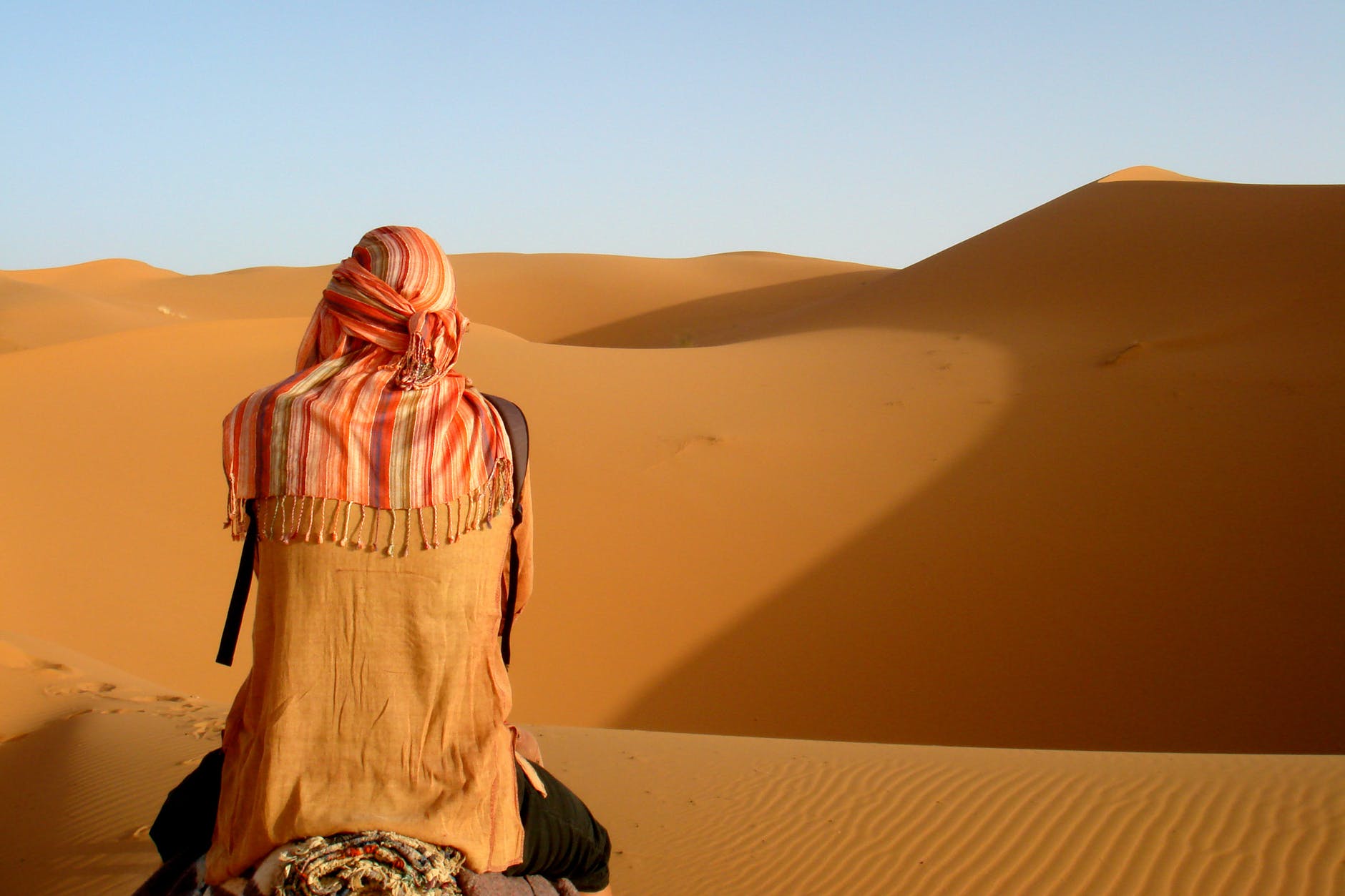
God called Abraham out of this lifestyle and away from this people to live in a new land, Canaan, and begin a new nation of people. “Get thee out of thy country, and from thy kindred, and from thy father’s house, unto a land that I will shew thee: and I will make of thee a great nation; and I will bless thee, and make thy name great; and thou shalt be a blessing.” Genesis 12: 1-2
Abraham’s name did become great and he did become a blessing for future generations of his family. So, there is an important lesson here in Abraham’s past: Lesson 2: your background doesn’t determine your future.
 From Peggy's Pen